HomeLatestSteel Exchange Repayment Boosts Industrial Flexibility

Steel Exchange Repayment Boosts Industrial Flexibility

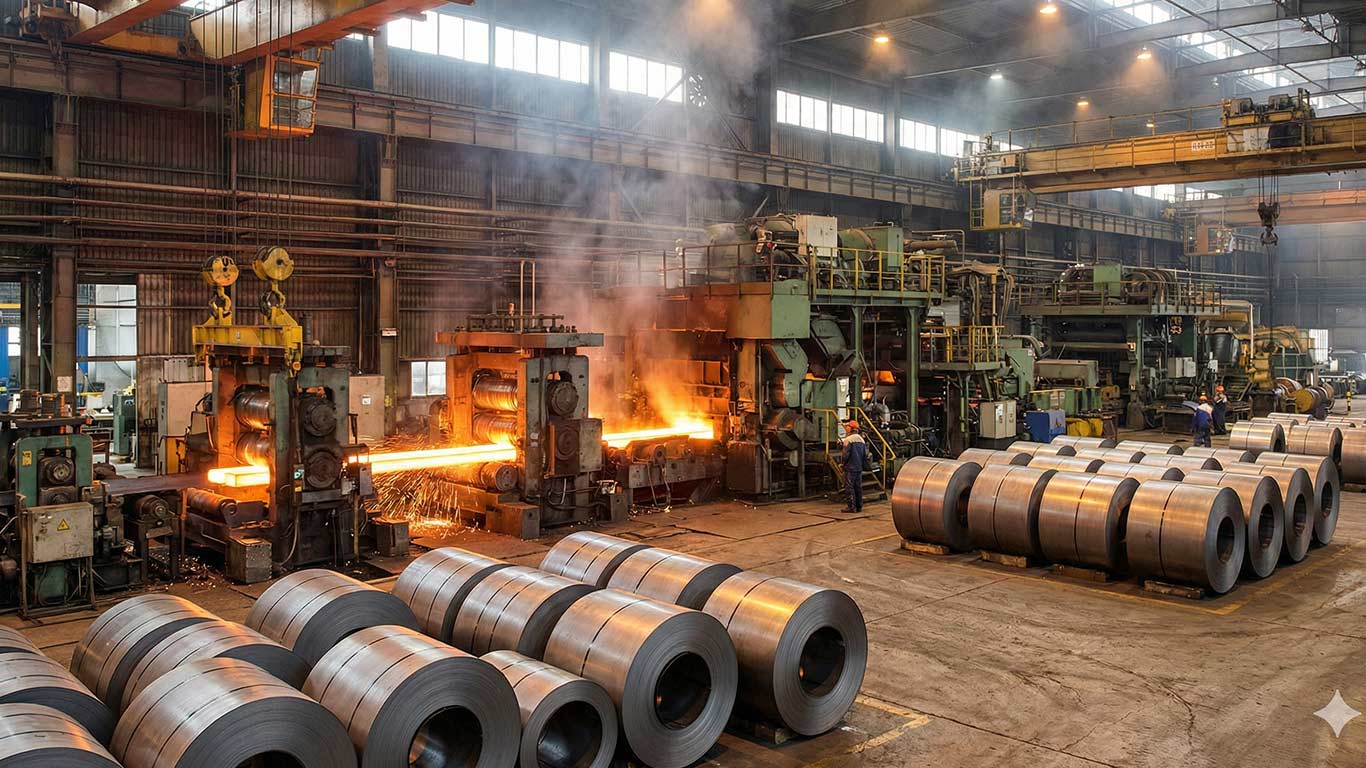
Steel Exchange India has redeemed ₹43.19 crore of non-convertible debentures in a single tranche, accelerating efforts to reduce leverage at a time when domestic steelmakers are navigating volatile input costs and rising infrastructure demand. The repayment highlights how mid-sized industrial firms are prioritising balance-sheet repair to remain competitive in India’s next construction and manufacturing cycle.

The company said the latest redemption represents around 13% of its total outstanding debt. Combined with repayments of ₹28 crore over the previous two quarters, total debt reduction has reached ₹71.19 crore in the recent period. For India’s industrial economy, such deleveraging carries wider significance. Steel manufacturing is capital intensive, requiring continuous investment in furnaces, rolling mills, energy systems and logistics. Companies carrying heavy debt burdens can find it harder to modernise operations, absorb commodity price swings or compete on cost when demand softens.Steel Exchange India operates integrated steel manufacturing facilities in Andhra Pradesh, serving construction and infrastructure markets. That places the company within a sector directly linked to roads, housing, warehousing, rail networks and public works. When producers improve financial resilience, it can support steadier output and better capacity utilisation for downstream users. The timing is notable. Indian steel demand remains supported by public capital expenditure, urban expansion and private real estate construction.

Yet producers continue to face uncertainty around coking coal prices, freight costs and imported competition. Lower debt obligations can give firms more room to manage these pressures without compromising investment plans.Industry analysts say finance costs are often an underestimated factor in manufacturing competitiveness. A company that reduces borrowings may free up cash for energy efficiency upgrades, scrap handling systems, emissions controls or product diversification. In steelmaking, where margins can move quickly with raw material prices, stronger balance sheets can be as important as higher production volumes.For cities, this matters more than it may appear. Steel is a foundational input for metro rail systems, bridges, flood protection assets, industrial sheds and affordable housing. Stable domestic producers help reduce project execution risks, especially when global commodity markets become volatile.There is also a sustainability dimension. Older, debt-stressed industrial plants often delay cleaner technologies because capital is scarce. Companies with lower repayment burdens may be better placed to invest in waste heat recovery, renewable power sourcing or lower-emission processing routes over time.The latest repayment therefore signals more than a financial transaction. It reflects a broader shift among Indian industrial firms toward disciplined capital structures after years of expansion-led borrowing.

The next phase for Steel Exchange India will depend on whether debt reduction translates into operational gains—lower costs, stronger margins and investments that improve environmental performance. For the wider steel sector, balance-sheet strength is increasingly becoming a strategic asset in an era of infrastructure growth and tighter sustainability expectations.

Also Read: NoBroker Interiors Push Expands Offline Presence

Steel Exchange Repayment Boosts Industrial Flexibility
RELATED ARTICLES

LEAVE A REPLY

Please enter your comment!
Please enter your name here

- Advertisment -spot_img

Most Popular

Recent Comments

India Cements Deepens Clean Power Investment Push

India Cements Deepens Clean Power Investment Push

India Cements has moved to strengthen its presence in the clean energy ecosystem through a strategic investment in a renewable power services company, reflecting...
India Cement Growth Faces Infrastructure Test

India Cement Growth Faces Infrastructure Test

India’s cement sector is entering a more cautious growth phase, with industry forecasts indicating that demand may ease to around 5 per cent in...
India Cement Sector Turns Toward Wind Energy

India Cement Sector Turns Toward Wind Energy

India’s largest cement producer and its recently integrated subsidiary are expanding their reliance on renewable electricity through a new captive wind energy arrangement,signalling a...
Raheja District Wins Excellence In Township Award For 60 Acre Navi Mumbai Development

Raheja District Wins Excellence In Township Award For 60 Acre Navi Mumbai Development

As India’s urban centres continue to expand beyond traditional city cores, large-scale township developments are increasingly being assessed not only for their real estate...
BPTP Launches Downtown 66 Luxury Residences In Gurugram Sector 66

BPTP Launches Downtown 66 Luxury Residences In Gurugram Sector 66

A new residential development in Gurugram’s Sector 66 is drawing attention to the continued expansion of housing activity along the city's rapidly evolving growth...