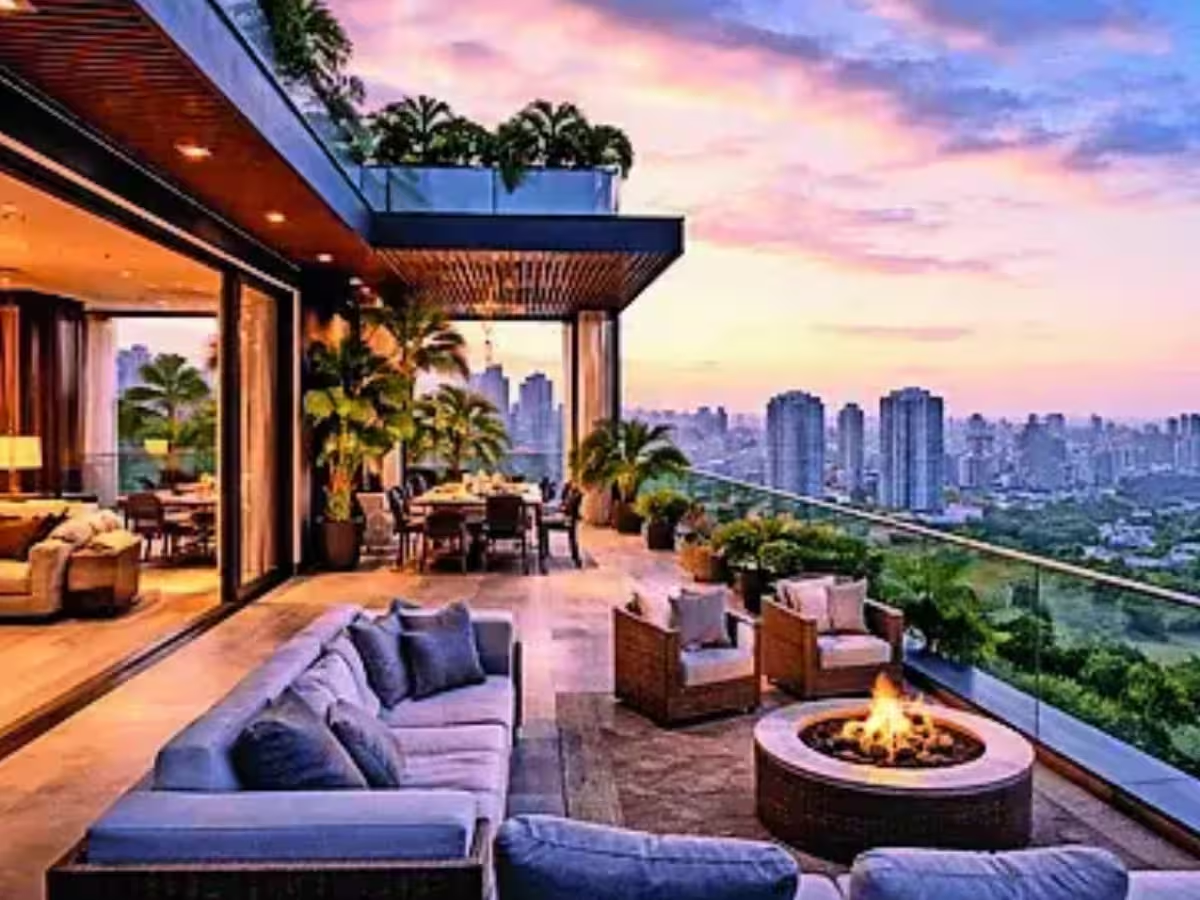
A ₹271 crore penthouse transaction in Gurugram has pushed India’s ultra-luxury housing market into new territory, highlighting the widening value of premium residential assets in the National Capital Region. The deal involves a 17,200 sq ft penthouse at DLF’s The Dahlias, with its 10,500 sq ft carpet area implying a value of nearly ₹2.6 lakh per sq ft.
The transaction is being reported as the country’s costliest single-unit residential deal. The property’s super area works out to roughly ₹1.58 lakh per sq ft, while the carpet-area calculation gives a substantially higher figure. The distinction matters because carpet area reflects the usable internal space, whereas super area can include a proportionate share of common areas. The sale is significant beyond its headline value. Gurugram luxury housing has increasingly become a separate segment of the residential market, supported by high-income households, entrepreneurs and investors seeking large-format homes in established urban corridors. The city’s premium residential market is now competing with traditionally expensive addresses in Mumbai and central Delhi for transactions involving the wealthiest buyers.
The latest deal also follows a strong sales run at The Dahlias. Earlier transactions included a ₹120.71 crore apartment sale for a 6,233 sq ft carpet-area residence in the same project. In January 2025, the development had already recorded more than ₹11,800 crore in bookings from 173 homes during its initial sales period. For the wider Gurugram property market, these transactions signal a sharp escalation in the value assigned to limited-supply luxury housing. They also point to a growing divergence between the economics of premium housing and the affordability pressures faced by ordinary households. A small number of record transactions can lift perceptions of a location’s value without necessarily improving housing access across the wider city.
Urban planners say the more important question is how this concentration of wealth interacts with the city’s infrastructure. High-value developments still depend on shared roads, public transport, water networks, drainage, power systems and waste management. As premium construction expands, ensuring that infrastructure keeps pace with population and traffic growth becomes increasingly important. The environmental dimension is equally relevant. Large homes carry substantial construction and operational resource requirements, making energy efficiency, water conservation, passive design and low-carbon building systems increasingly important in the city’s luxury segment. The ₹271 crore sale therefore marks more than a property record. It reflects the rapid financialisation of Gurugram’s high-end housing market while raising a broader urban question: whether future premium development can deliver exceptional private space without adding disproportionate pressure to shared city systems.