HomeLatestIndia Secondary Steel MSMEs Face Green Power Shift

India Secondary Steel MSMEs Face Green Power Shift

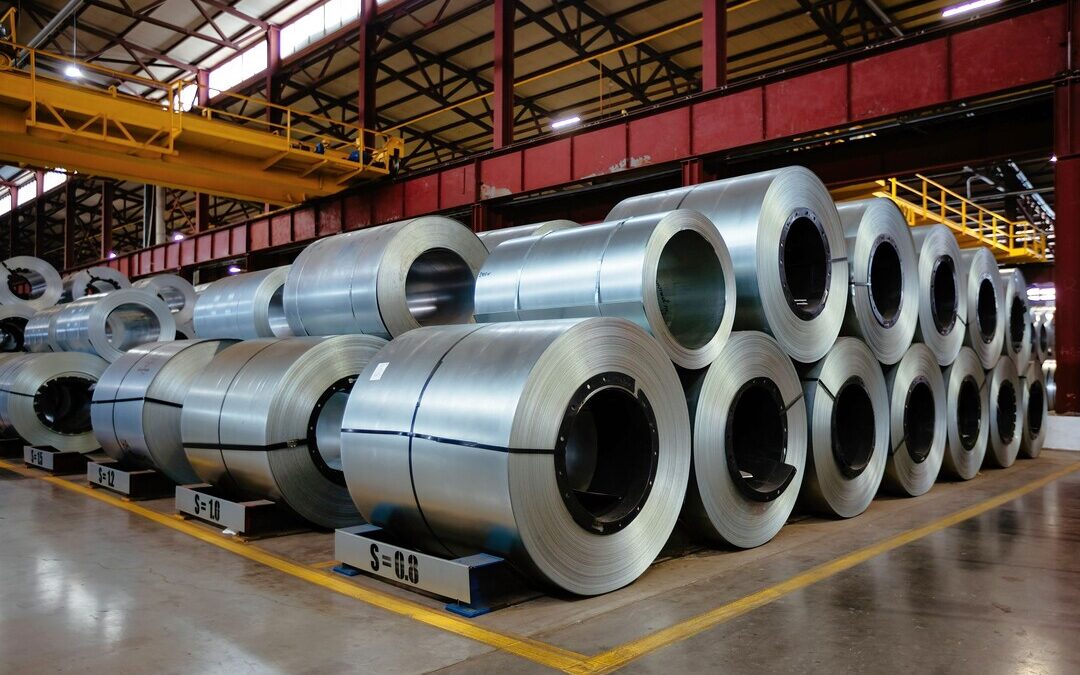
India’s fragmented secondary steel industry could significantly reduce energy costs and emissions by shifting towards renewable electricity, according to a new sector assessment. The opportunity is particularly important for micro, small and medium enterprises, which account for roughly 38–40% of India’s crude steel output and operate with far less financial capacity than large integrated producers.

The report estimates that renewable electricity could lower annual power expenditure by up to 34% for participating secondary steel units, translating into savings of roughly ₹2.2 crore to ₹2.4 crore per unit each year. Electricity can account for as much as 40% of operating expenses for these businesses, making power procurement a significant determinant of competitiveness.
The proposed solution is based on industrial clusters rather than individual factories investing separately. Under such a model, several manufacturers could collectively own or procure power from a renewable-energy project and share its output. Pooling demand can improve project economics while reducing the capital burden faced by individual MSMEs.The potential financial gain comes with a climate dimension. The assessment puts annual emissions from India’s secondary steel MSMEs at around 50–60 million tonnes of carbon dioxide across more than 1,000 units.

Yet renewable-energy adoption among these producers is estimated at only about 11%, compared with 22% for India’s electricity mix.That gap matters because the secondary sector is central to India’s construction economy. Steel from smaller producers feeds housing, roads, industrial buildings, engineering and infrastructure projects. Making those supply chains less exposed to volatile fossil-fuel and electricity costs could strengthen the resilience of construction markets, particularly for smaller contractors and regional developers.However, renewable electricity alone will not make steel production low-carbon. Research on India’s small and medium steelmakers shows that coal-based direct reduced iron remains one of the most emissions-intensive production routes, while constraints around technology, finance and industrial infrastructure continue to limit decarbonisation.The government’s steel-transition framework already identifies renewable power, energy efficiency, material efficiency, green hydrogen and alternative production routes among the main decarbonisation levers. Its green-steel taxonomy also links lower emissions intensity with progressively stronger environmental ratings.

For secondary steel MSMEs, therefore, the renewable-power case is not simply about cheaper electricity. It is about whether smaller manufacturers can remain economically viable while meeting increasingly demanding environmental standards. Secondary steel MSMEs will need access to affordable finance, reliable grids, shared renewable infrastructure and practical technical support if the transition is to reach beyond India’s largest steelmakers.The next challenge is implementation. Without stronger transmission networks, predictable power-market rules and financing mechanisms suited to smaller firms, the projected savings may remain concentrated in a limited number of industrial clusters. For India’s rapidly expanding cities and infrastructure networks, cleaner and more resilient steel supply will increasingly depend on bringing these smaller producers into the transition.

Also Read : JSW Steel investment tests India’s low carbon path
India Secondary Steel MSMEs Face Green Power Shift
RELATED ARTICLES

LEAVE A REPLY

Please enter your comment!
Please enter your name here

- Advertisment -spot_img

Most Popular

Recent Comments

India Paint Sector Pricing Plans Face Input Pressure

India Paint Sector Pricing Plans Face Input Pressure

Berger Paints is assessing another round of price increases if a fresh duty is imposed on imported titanium dioxide, a key pigment used to...
Jindal Stainless Growth Highlights Changing Steel Demand

Jindal Stainless Growth Highlights Changing Steel Demand

Jindal Stainless closed FY26 with a stronger financial performance, as consolidated profit after tax rose 27.4% to ₹3,185 crore and EBITDA increased 19.2%. The...
Mahamaya Steel Results Point To Infrastructure Support

Mahamaya Steel Results Point To Infrastructure Support

Mahamaya Steel Industries has reported a 29% year on year increase in consolidated net profit for the June 2026 quarter, signalling stronger earnings even...
India Steel Projects Enter a Higher Risk Cycle

India Steel Projects Enter a Higher Risk Cycle

India’s steel industry is entering a more demanding investment phase as producers pursue capacity additions, overseas ventures, raw material integration and cleaner production. The...
Hemadri Cements Faces Fresh Pressure On Earnings

Hemadri Cements Faces Fresh Pressure On Earnings

Hemadri Cements has reported a sharp deterioration in its financial position for the quarter ended June 30, with its net loss widening to ₹60.08...